RSS Feed
Showing posts with label simplicity. Show all posts

My Favourite Wallpaper

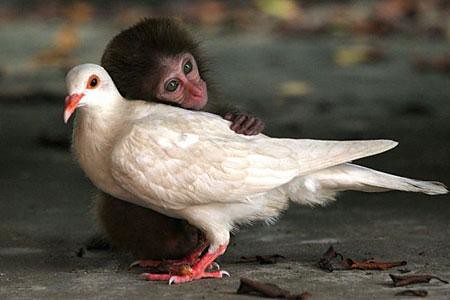
This picture wins the award for being my cell phone wallpaper for the longest period of time. (Others never stay more than a few days.)
A couple of weeks back I changed it, not because I was as usual bored, but because of the feeling it's not very "me" to stick to the same image for so long... But within a day I was back to this one. It's so beautifully intriguing that I never get tired of looking at it—in fact I find myself staring at this picture for minutes at a stretch and admiring the beauty.

Never tried finding out whether it's real; don't remember where I downloaded it... Who cares. It's about the beauty. The simplicity. Which this has in abundance.

RSS Zen ;)

Two summers ago, I had started actively following a few tech blogs, through which I learnt about Google Reader. And soon, was in an infinite loop of discovering new blogs and subscribing to them. For months I was on what felt like a learning high, particularly in terms of free software, web apps and some tech news. With time my subscription list began to grow to include personal blogs and blogs about productivity, happiness, simplicity, science, news, apples, oranges and lemons. And obviously, it didn't take time for the process to become counter-productive and give me mini-panic attacks to see upwards of 500 unread items every day.
So, now finally I have almost achieved RSS zen by cutting down the list. Here's what I did:

1. Reduce the number of tech blogs on my list

I had found out about most tech blogs on my list via guest/shared posts on Lifehacker and MakeUseOf and had started following them. Soon, I was mostly just getting the same information from multiple sources. Unproductive. I traced the route back and have now unsubscribed from most tech blogs but these two and a few other favourites.

2. Unsubscribe from blogs that would look good on a list, but weren't getting read

Having realized that some of the blogs on my list weren't actually getting read, I unsubscribed. The names are stuck in my memory well enough to guarantee an occasional visit to the web log itself.

3. Refer to stats for starred items

I use starred items mostly to bookmark posts that I will keep wanting to come back to. Looking at the blogs with the least starred items gave me a good idea of which ones I don't want to follow.

4. Split followed blogs across platforms

Unbelievably for me, I now follow mental_floss only on Twitter. Likewise, TED.com and IBNLive are only on my Facebook pages list. This actually helps, and makes reading more interesting because now I don't have to read all my posts with the same UI.

5. Keep Reader for "forgettable" blogs
I might miss a tweet or Facebook update, but it's hard to just not notice an unread item in Reader, so I've made sure that smaller or low-frequency blogs stay on.
Reader's unread posts counts had become a scary number. With # 4 and 5, that number's smaller, without a change in the amount of information I'm fed.

I have now effectively come down to a few tens of posts everyday, which can be easily navigated through in under an hour, and many more posts get actually read now. :)

(This post was typed in Bend, a text editor worth at least a test drive. For now I'm keeping it for concurrent use with Q10.)

No, I Don't Miss Wi-fi

For almost two years now, I've been used to living near a laptop, connected to the internet till eternity, with at least a couple of browser windows and some apps dancing around my screen when I press Win + Tab. (Yes, I'm a Windows person. Sigh)
And now suddenly, sitting in a cutely gorgeous house in Chandigarh, having been here for a month and intending to bug Uncle and Auntie for another half (at most), I'm actually relieved that my life is so offline.
I use the internet a few days a week for a few minutes. Well, not really my kinda internet—just blogger, google reader (only to mark all items as read), gmail and a few seconds on facebook.* And you know what? I was seriously, honestly satisfied with that. Now it is purely by choice that I almost avoid going online. Some of you who know me well might be giggling right now, mostly in disbelief. The others would think this is natural, or crazy or anything in between. Whatever it is, I'm totally serious here. There's suddenly so much more time. I still cling to this laptop a lot, but end up doing lots of offline stuff, invariably very productive or happiness-generating activities. I've been reading and writing a lot more than usual lately, and catching up with some movies.
And yes, I am missing out on truckloads of things that I enjoy doing, but those can wait. It's good to be relatively disconnected at times. Wonder if I can ever survive without a cell phone. (Now you must be laughing your heads off. :P)

*Although on my weekends home, it's hard to not go back to the same old routine.

Flabby Happy meets Skinny Smily

Here's a piece I wrote on the redundancy of perfection, primarily in body shape:


"Aim at perfection in everything, though in most things it is unattainable. However, they who aim at it, and persevere, will come much nearer to it than those whose laziness and despondency make them give it up as unattainable."
Lord Chesterfield must have been a wise man; who else could have given humanity a never-ending goal to strive for?
But maybe, just maybe, he didn't quite get it right. Why should we aim to hit perfection, knowing fully well that it is as unreal as mathematical infinity, or rather iota? Sure, it is a way of constantly reinventing yourself; sure it ensures you don't get complacent; definitely, it helps you reach zeniths of success you might never have acknowledged the possibility of... But there is a catch. A rather big one, actually. Of course, as opposed to "laziness", perfection is... let's just say a perfect option. But between the black and the white, there are quite a few rich shades of grey. After all, grey is the new black!

The pursuit of perfection carries around a transparent cloak of unrealness. While we deliberate, discuss, or debate, the cloak remains invisible. But when it comes to being in the real world, things change.
How many of us genuinely don't want a bikini-babe/ramp-hunk body? Yet how many of the rest have one? I could go on with the statistics now, but what are we getting to? Are we robo sapiens, expectedly crafted to perfection, all manufactured and quality-checked to ensure size-zeroes or eight-packs? In case anyone's waiting for an answer, go figure.

We frequently notice the flabby using the evergreen khaate-peete-khaandaan-ke-log as an argument-stopper. The ones far on the other side of the spectrum of course are assumed to be happy and satisfied.
This is where we get carried away into the wrong territory. Whoever started the idea of happiness coming from having things? True happiness and satisfaction are not outside-in phenomena. They're exactly 180 degrees away from that—inside-out. I'm happier with my few-extra-pounds than my next-door neighbour with enviably chiselled curves. And the reason is simply that body shape (or salary, or car brand, for that matter) is not the right yardstick to measure happiness.

It's actually interesting to wonder how the thought of desirability and body fat being inversely proportional originated... But who cares? Now is the time to question it! Don't get me wrong here; I'm not defending couch-potato behaviour or condoning sedentary lifestyles, and the bunch of grapes in my palm is perfectly sweet. I'm simply hoping to shake up some closed minds. It's not merely a matter of perspective: Researchers recently combined the best features of the faces of some of the world's sexiest women, including Kiera Knightly, Angelina Jolie and Megan Fox. And no goodies for guessing that the end result was a face just above average, at best. Irrelevant example, you may say, but the point is that literature accepts that the greatest perfection is imperfection.
There you go! With a reasonable and scientific proof against the real existence of perfection, a mere mortal doesn't even need to go on rambling about it.

And hence she stops.

7 Photography Tips for the Beginner

1. Read the owner's manual. This one might win an award for obviousness, but it really is important. The owner's manual is an easy-to-understand way to familiarize yourself with everything your camera is capable of.

2. Do not stick with the Auto settings. This will of course require you to have read the owner's manual first. The idea is to not only know all the settings, but also use them for every picture you take. Auto of course saves time, and usually works well, but in some cases you can really see the difference if you adjust the settings first.

3. Optical zoom good. Digital zoom bad. The idea is simple. Optical zoom is what happens as a result of your camera's lens moving towards the object. And it's good. Digital zoom, however, is (umm, err, eh...) a digital thing. The badness of it lies in the fact that it leaves your picture looking grainy, and drastically reduces the quality, which becomes very obvious on a larger screen/print.

4. Keep reviewing for later. Not only does this save battery and time, it also ensures you don't delete a picture that looks bad only on a little screen, and not a bigger one, where you'll end up seeing it way more frequently.

5. Carry around your camera everywhere. With extra memory cards and battery pack/s. That's two tips rolled into one, but they're both very obvious too. Always try to be prepared for a good shot by keeping memory cards/films and battery packs plus your camera handy at all times, so you never have to miss a great shot, or make do with your cell phone's camera.
MAKE SURE you don't keep it away from yourself, though. (Lesson learnt the hard way.)

6. Transfer pictures often to your computer. Makes it easy to review, delete and edit pictures by reducing the number you have to deal with in one go, and also frees up memory on your card. And minimizes your loss in case your camera gets lost/stolen.

7. Capture from as many different angles as possible--try every new idea you can think of. This usually generates great pictures out of everyday subjects.

Bonus: Shoot in the RAW format, rather than JPEG, if your camera will let you. It might be inconvenient when you start, but really helps with post-production. I'm still learning more on this, so I recommend you look it up.

Share your own in the comments!

One-word Inspiration

Think. Dream. Be. Do. Act. Laugh. Create. Rise. Shine. Smile. Ideate. Begin. Energize. Stimulate. Ask. Engage. Appreciate. Compliment. Inspire. Enliven. Read. Write. Listen. Innovate. Rejuvenate. Love. Hug. Focus.

Run to Simplicity

There was the Notepad Age, there was the WordPad Age, the MS Word Age, and then, somewhere down the line, a crossroads appeared—on the one side, MS Word and other word processors were increasing and improving their features, and on another, the simplicity bandwagon was accelerating and preparing to overtake the heavy feature-laden softwares.
(Writeroom, Q10, JDarkRoom, Writer, DarkCopy)

And today, the scene is that there are known hacks in the computer-geek circles to achieve Writeroom-like simplicity--black screen, green text, and no other features--in the more ubiquitous Word/Google Docs interfaces. Wow.

This makes me think of simplicity in a wider perspective. Leo Babatua talks highly of simplicity as a way of life, and to me the extent of simplicity in his life is alarming. I personally do not have a fixed opinion on this. I've made a comfortable place for myself on the fence, and keep jumping to either side every so often.

What do you think about reverting to the simple in various aspects of life? Do share your thoughts.

Questions, Comments, Critique

For a person producing a creative/artistic piece, feedback is one of the most important steps towards improvement.
I see myself as a writer and a photographer in the making, so it is important for me to know what people think of my work. I want to work in a way that people can like and appreciate. And the three best ways to measure public opinion in this regard are Questions, Comments and Critique.

Questions: Do you wish to ask me anything related to the work? Does it leave you with any puzzles? Did any of my thoughts/expression confuse you?

Comments:
Tell me what you think of my work. What emotion did it arouse within you? Could you relate with it? Did I end up fulfilling the objective/s I started out with? Generally, what do you think?

Critique: Give me a critical analysis of the work. Point out technical, grammatical, ideological errors, etc. Help me improve my skills and expression.

On this post, and elsewhere and everywhere, QCC are always welcome. I'm a big strong girl, you know--I can take whatever you got! :)

Top Ten Things to Do for a Loved One

I have no memory of how and when I fell into this thought trap, but fall I did for sure, so here are the results of being in the trap for several hours:
(These are not only for sweethearts, but also for friends, parents... Yeah basically, loved ones. Here's a bonus: most of them are easy on the pocket. :D)

10. Meet up, in a "Zero Technology Space-time"
The fancy term is grossly inaccurate, but it conveys the idea well, I think. This one is especially for people who don't get to share a lot of quality time with their loved ones. Make the time to meet, in a quiet place, and keep cell phones, laptops, televisions etc. totally away. (Mentally away is more important than physically.)

9. Work for a Cause Together
This can work extremely well if you both feel strongly about a certain issue. Help spread AIDS/cancer awareness, participate in an anti-corruption rally, or help spread the "Go Green" message.

8. Create Something Together—And it Doesn't Have to be a Baby :P
This can give you a very wide range of choices--paint your house, assemble a computer or do an art/craft project together. Create something tangible that will be a lasting symbol of your collective hard work. A baby actually fits into this pretty well, if that's applicable in your case. ;)

7. Give Them a Nickname
A friend of mine used to call me "Blossom" and it's one of the sweetest names I've ever had. Think of a name that's cute and sounds nice--but don't use it all of the time. “Sunshine” and “Cupcake” are my personal favourites, although I hate that they’re so hackneyed.

6. Take (Long) Walks Together
The utopian idea about this would be a long, slow walk after dinner, when it's not totally dark yet, with a scenic view around. Perfect for interesting and warm conversations, and exercise too. Long drives work too, but they're not really the same.

5. Make a Slideshow/Scrapbook of Your Shared Memories
Don't worry too much about putting the pictures together; just pick out your mutual favourites. Once you're done and satisfied, make sure you can have some uninterrupted and quiet time together to look at the slideshow/scrapbook. By the way, Windows Movie Maker, Animoto, Stupeflix, Picnik, Slide, etc. can be helpful apps.

4. Allow Them to Relax and Leave Things to You
Particularly if you live together: This is perfect for an evening during a busy week. Also a great background to a special dinner or some lazying together. I'll leave rest of the imagining to you. ;)

3. Surprise Them
Meet them where and when you're least expected; of course having double-checked that the plan won't backfire! Give some minutes to each other, tell them how special they are, and leave them with a flower or a small gift as a cute memory of the moment. Or just leave “Boo!” or “Gotcha!” or of course “Love You!” notes where they’d be least expected.

2. Gift Them an Experience
It could be a movie and dinner date, or a dance/cooking class together, but doesn't have to be that fancy. For me, coffee and breakfast in bed on a cold weekend morning is great too. (Aha!)
And finally, point # 1. (Thank you for the drum-roll!)

1. Keep It Real
Nothing expresses your love for a person better than truly, deeply loving them. Listen to them, genuinely care for them, and most of all, accept them for who they are. You wouldn't need much more if you can just do this well.

So those were my top ten. Let me know what yours are, and which ones of these you like best, and worst.

The Big Secret to Success

Okay... So the title's probably really got your attention. Good. So let's head off to the big secret, shall we?
But before that:
"There's some good news and some bad news...
The bad news is that there is no good news."
(From the Beau Peep comic strip in The Times of India many months back)
Disappointing for sure, and here's another one:
"The big secret of success is that there's no secret."
(From my crazy mind that's no good at comic strips)

I haven't done anything exceptional or achieved anything wondrous in my life yet. So I am nobody to be giving out success gyaan. But I do have some thoughts on success that I'd like to share. And I hope that one day I will have moved from Dream to Action and be moving from bigger dreams to better action.
That said, let's get back to the big secret, or rather the absence of it.

In whatever little success I have achieved so far, I've realized that it really was a direct result of focus, commitment, and hard work. So, my point in this post is that success isn't really that complicated. We tend to have the expectation of a shortcut, and waste a lot of time trying to find it, whereas the real need is to spend our time doing what we instinctually know. Really, my belief is that the actual basics reside deep within us--again, focus, commitment, hard work, and sometimes practice. And a big one--being consistent around your goals. Along with these, embracing failure as just a step towards success is also crucial. This might go against what we think, but is still a major part of nearly every success story. Unless we look at failure as something that has been sent our way to inflame us even more, we cannot succeed. I hate to use the cliché, but "Failure is the stepping stone to success."
Back to the instincts then: For students nothing is as important as sticking to the right path, and incessantly contributing towards achieving their (academic and other) goals. For a salesperson, I guess the biggest thing is to show empathy for the customer's needs and think from their perspective. And in case of entrepreneurs/managers, probably the biggest tip would be to treat the employees well and try to create a balance between concern for productivity and concern for people.
Nothing new, right? See! That exactly is my point. So, the bottom-line really is that success--personal, organizational, at virtually any level--mostly comes as a direct result of the things we know are its ingredients. And if possible, we need to garnish the dish with smart work (versus hard work), productivity tips, and life hacks. These are supposed to help; they can hardly do much just by themselves.
I hope you find this post inspirational. Hit back with comments sharing your thoughts on this, and your own little formulas for success.